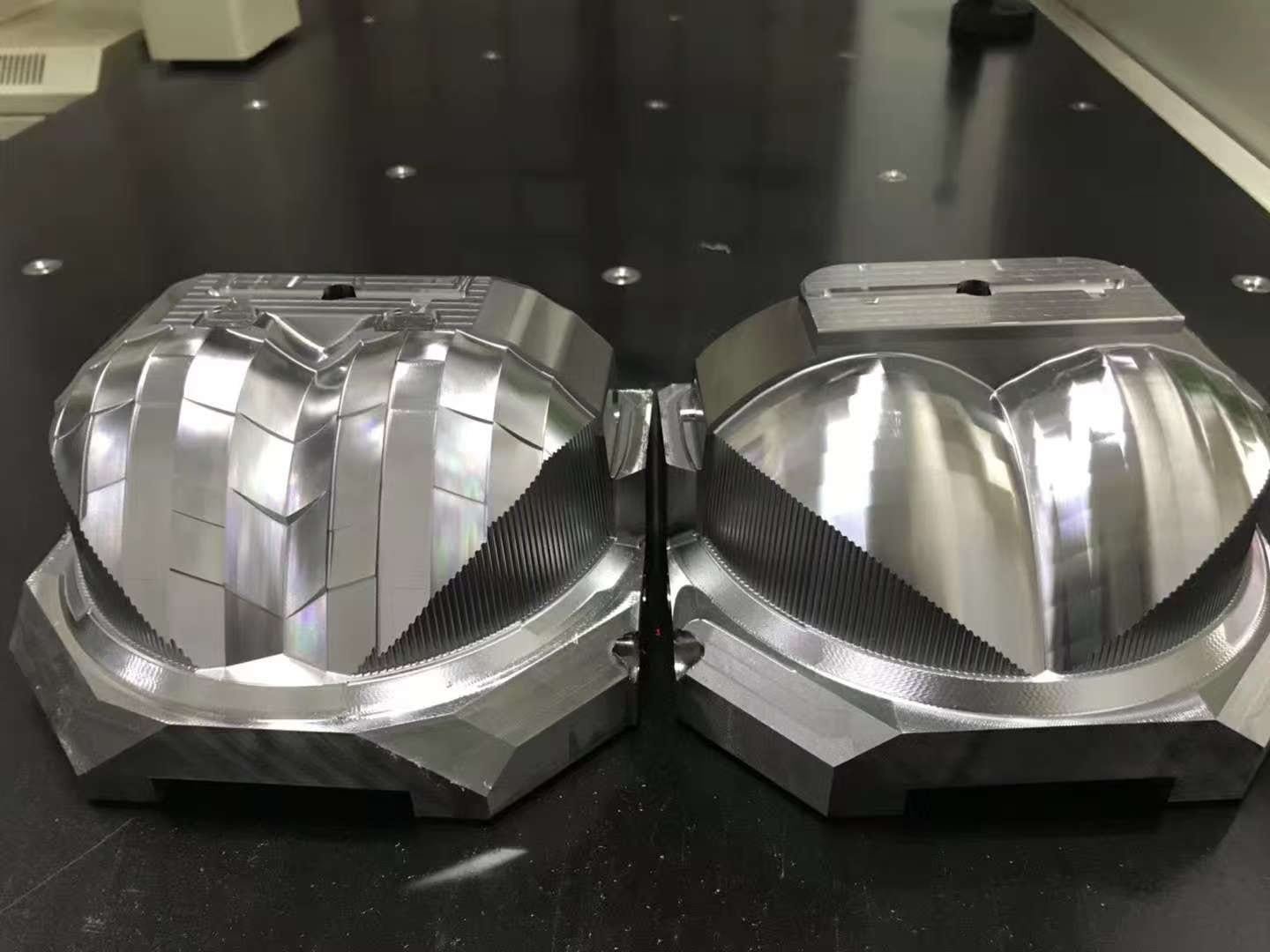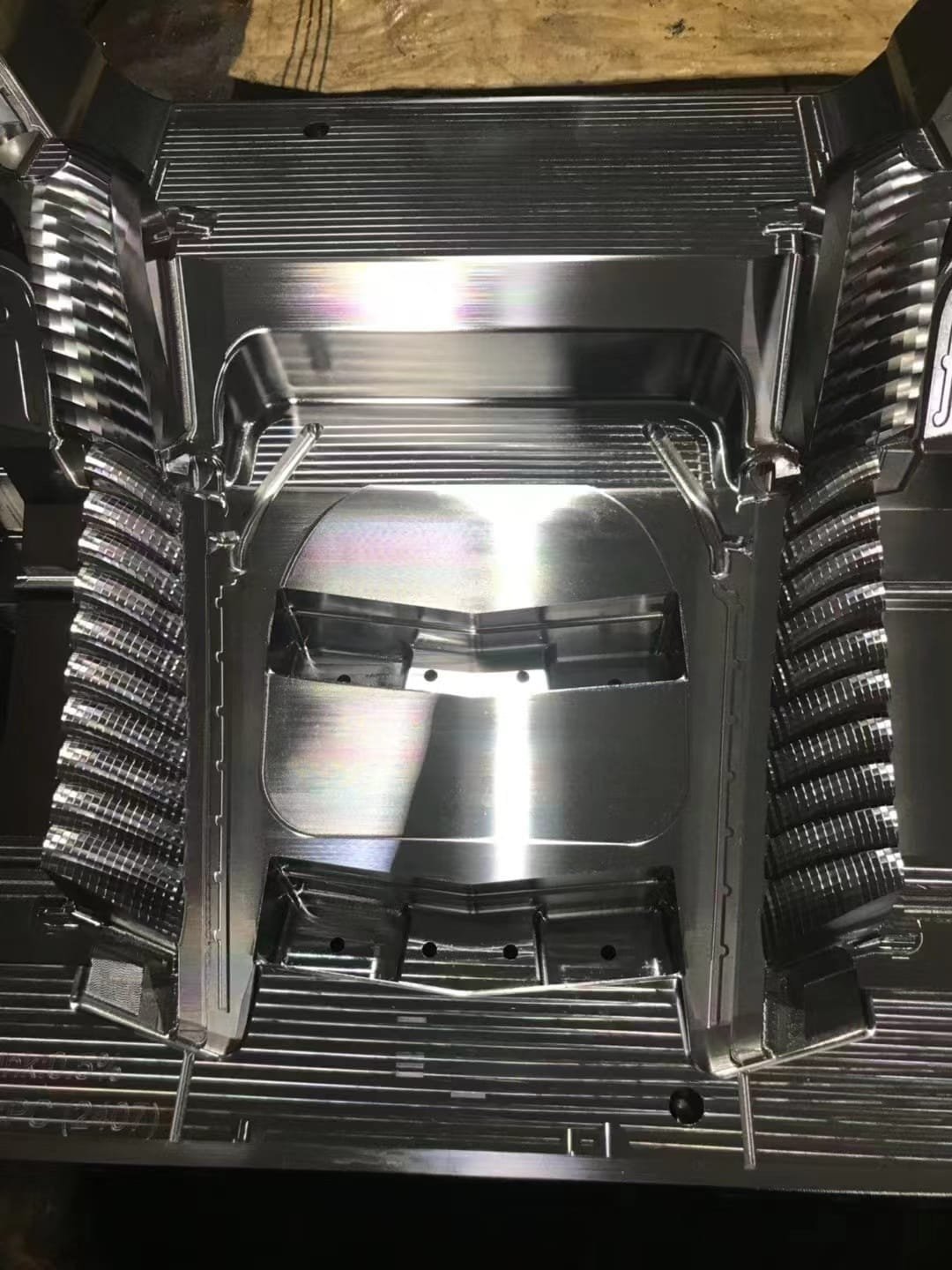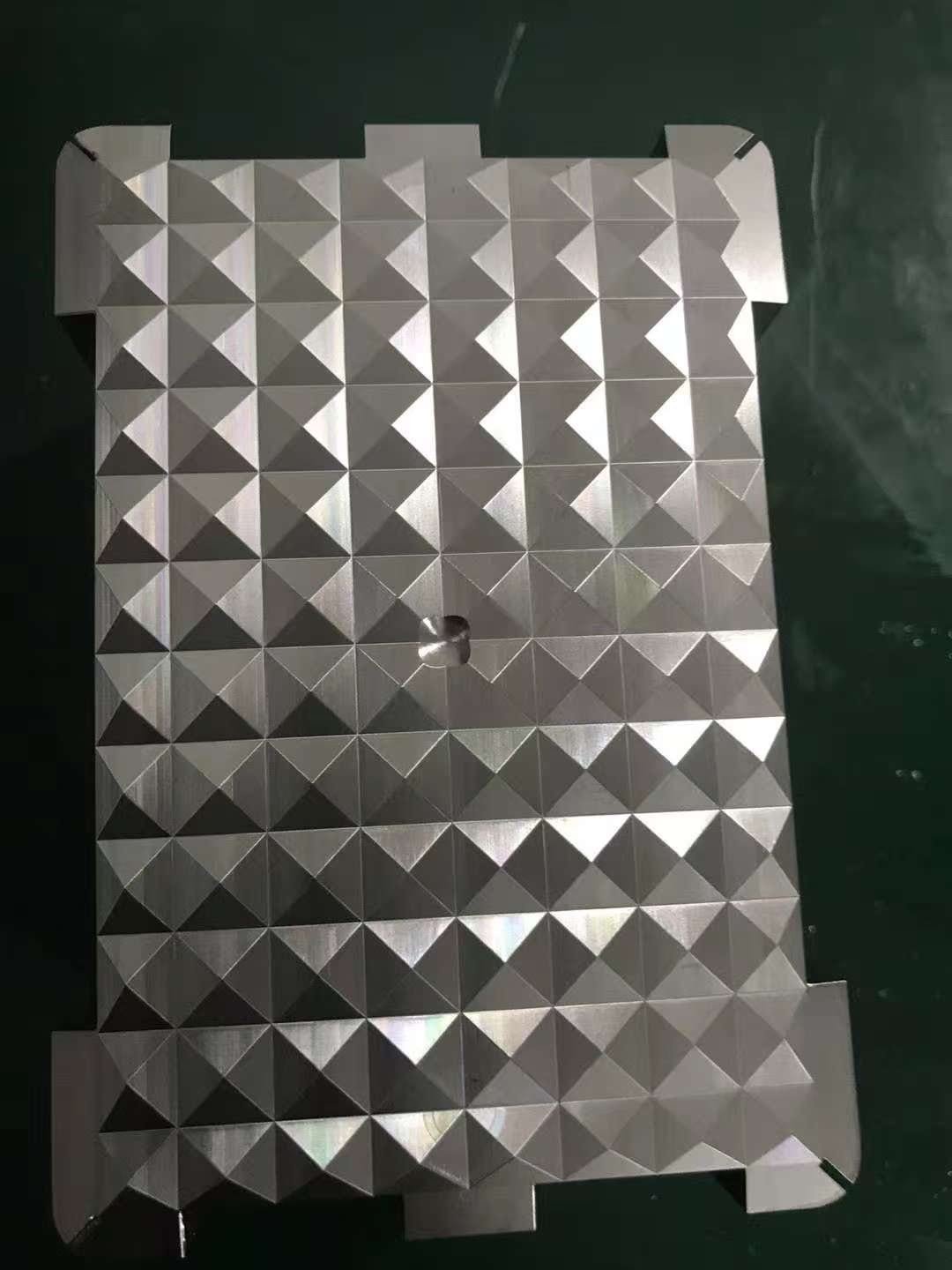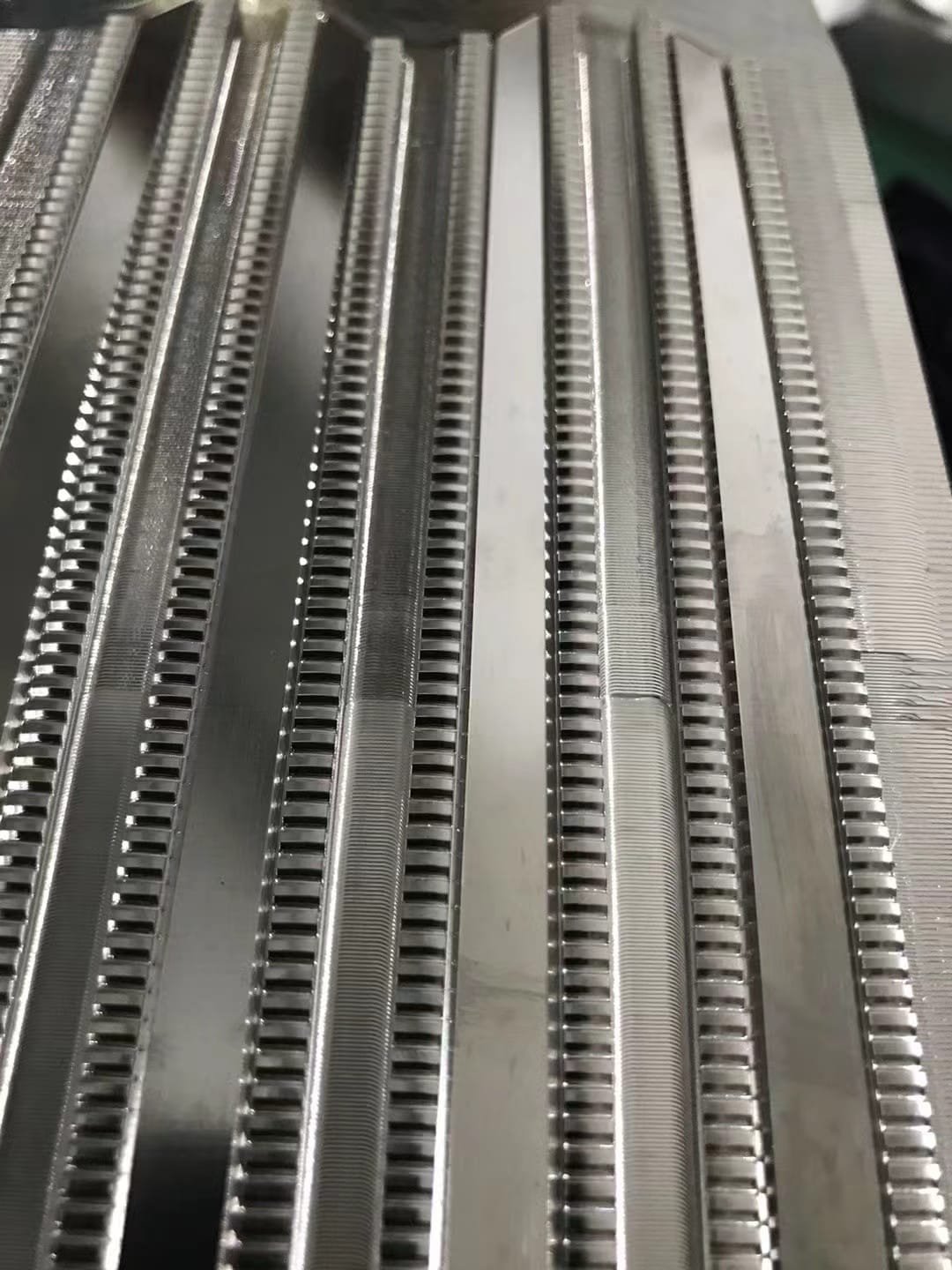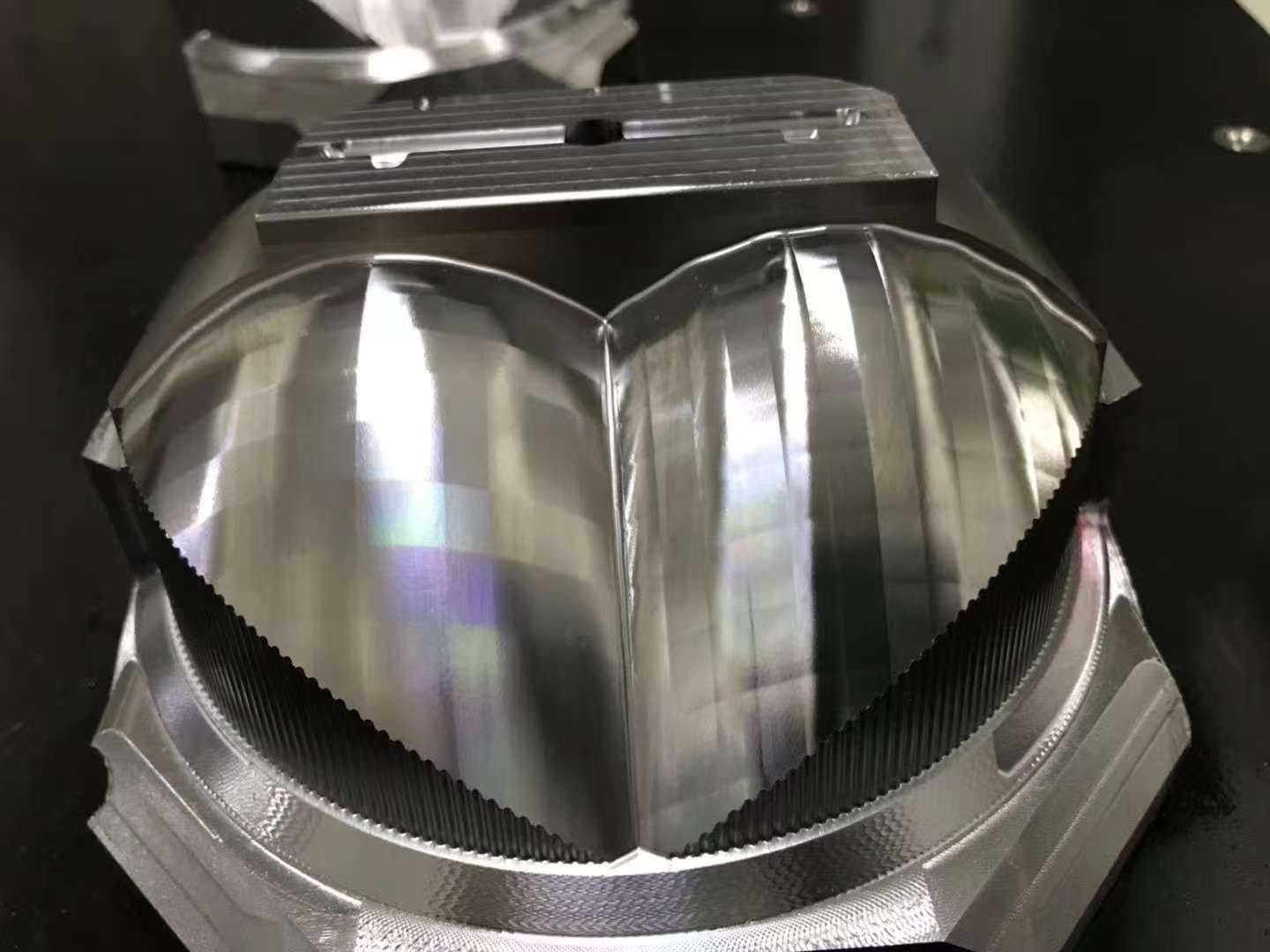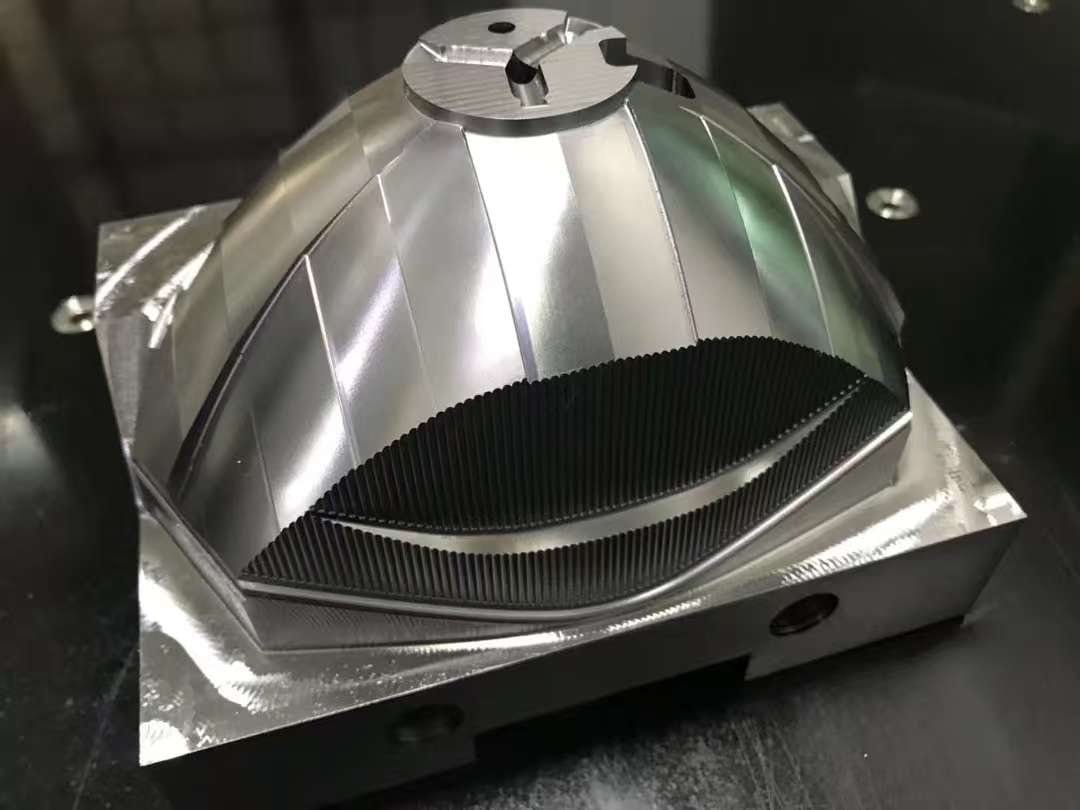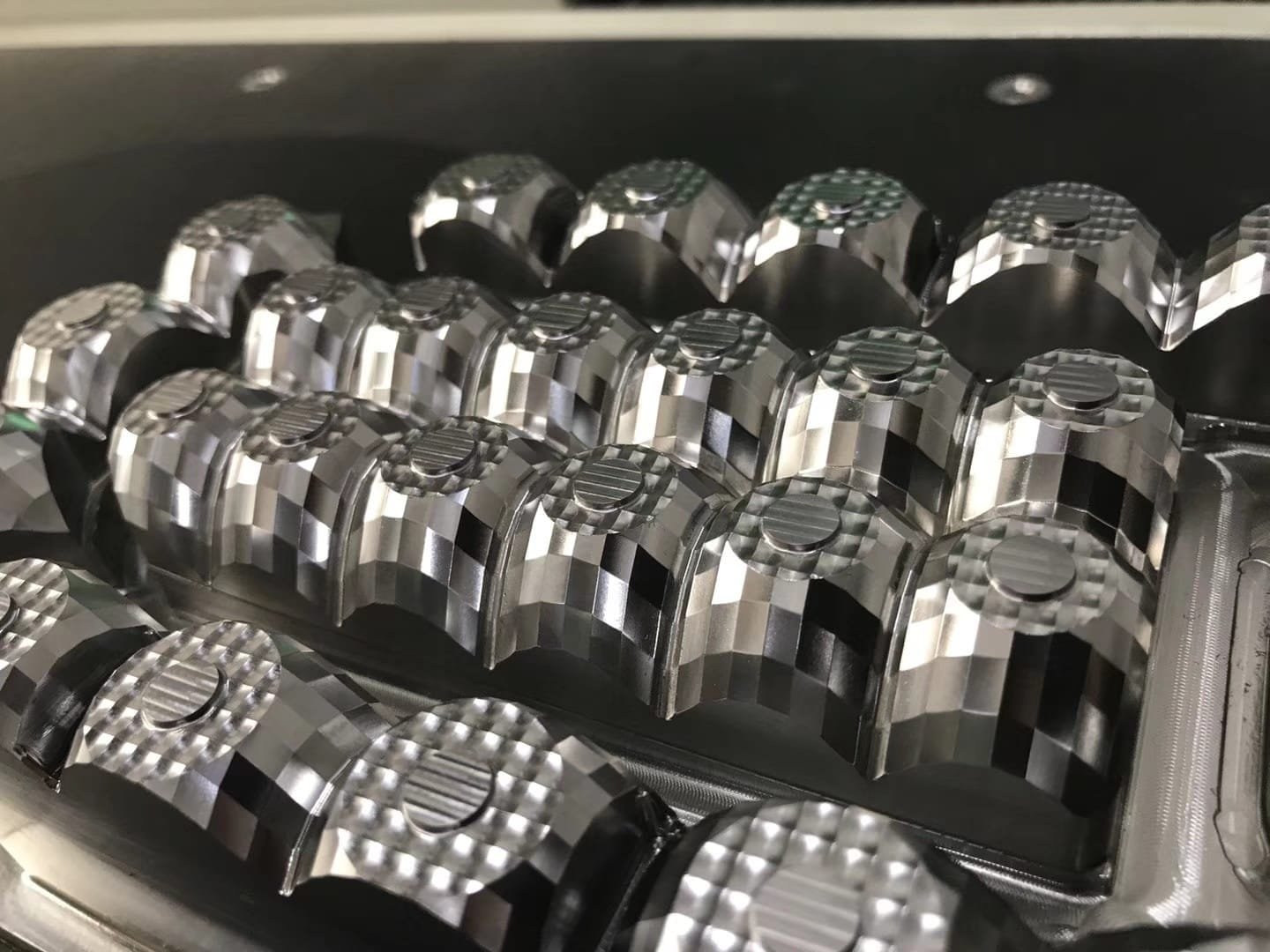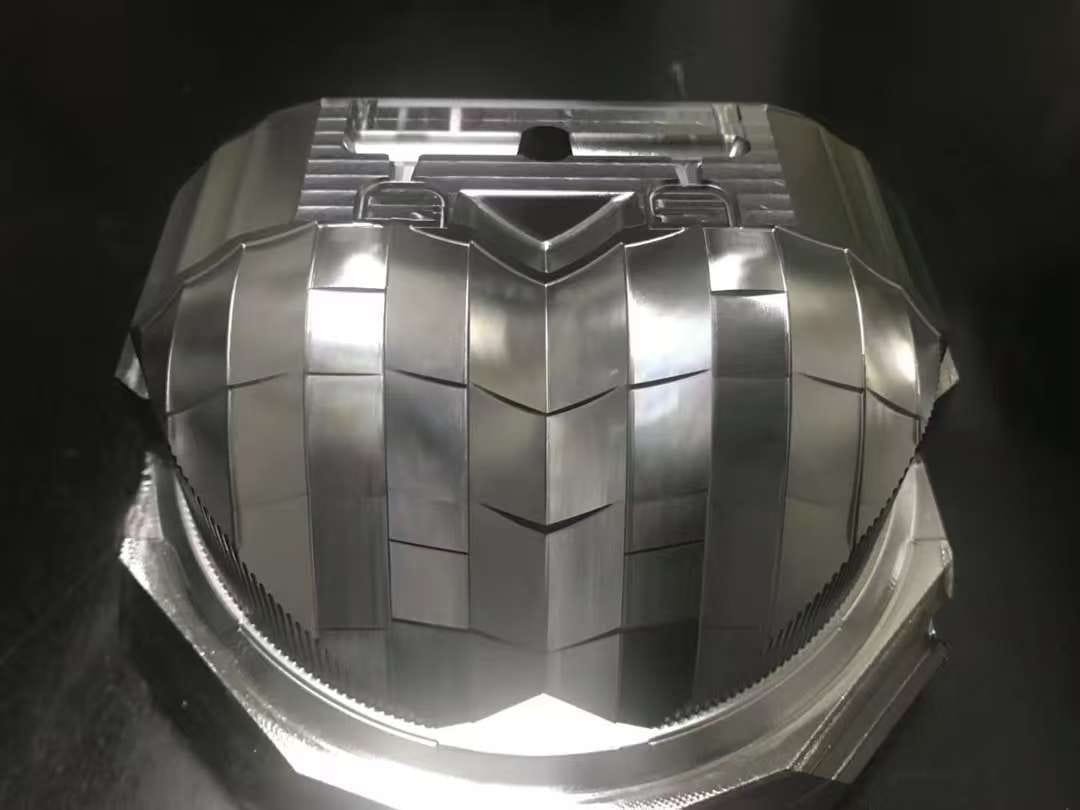
Broad freeform surfaces and fine repeated features create two different visual review scales. Eight authorized project photographs show both on multiple physical components, rather than presenting a single isolated beauty shot.
Buyer Decision Context
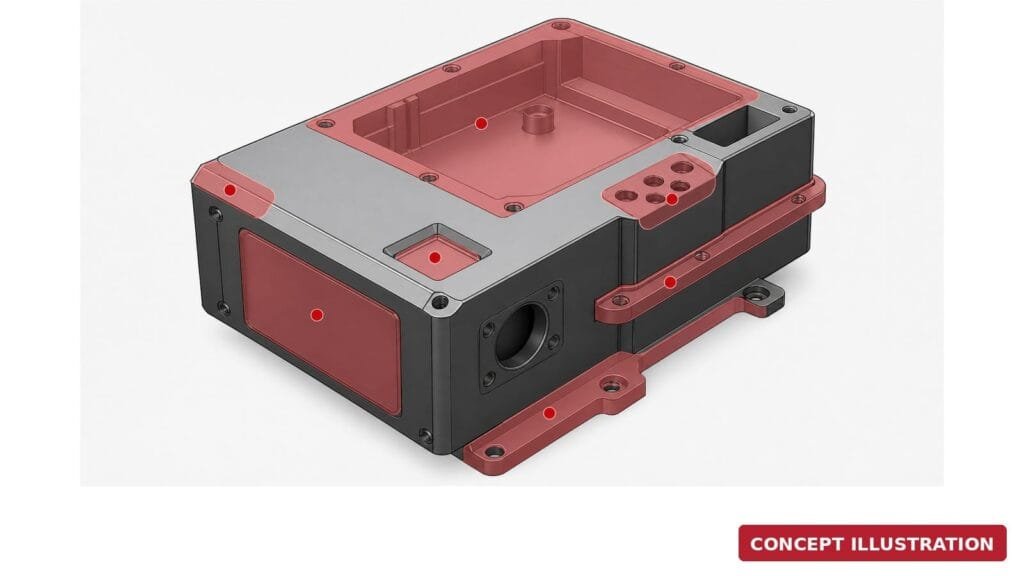
Use this record when deciding which regions of a complex component must be marked as form-critical, appearance-critical, or feature-critical before quotation. The photographs can help a buyer locate the questions; they cannot replace dimensional or surface evidence.
- Decision guide: /en/dfm-checklist-before-quote/ — mark critical surfaces, interfaces and required evidence in the RFQ.
- Evidence guide: /en/physical-product-prototype-testing/ — separate visual appearance from measured form, texture and functional evidence.
Project Evidence
The image record directly shows multiple separate components with smoothly changing freeform geometry. Across the views, broad curved areas sit beside pockets, edges, and localized details.
Other views show highly reflective surface areas and fine repeated geometric patterns. The record makes changes in surface scale, edge condition, and localized feature definition visible from several angles.
Engineering Context
Freeform optical tooling is not evaluated by gloss alone. A CIRP review from researchers in freeform optics describes design, manufacturing, replication, measurement, and characterization as connected parts of the same engineering problem. For parts in this class, teams commonly separate overall form review from local texture or feature review because each needs a different measurement scale. This is general engineering context, not a statement about the methods used for the photographed components. Public reference: Fang et al., Manufacturing and Measurement of Freeform Optics.
A practical review brief should therefore identify which surfaces are form-critical, appearance-critical, or feature-critical. That distinction helps prevent a visually bright surface from being treated as proof of measured geometry or optical performance.
Documented Result
The documented result is a group of physical components with visible freeform geometry, reflective areas, and fine repeated patterns. The eight views provide a reviewable visual record of broad surfaces and localized details.
Evidence Note
The available record verifies visible geometry and surface appearance only. It does not establish material identity, manufacturing route, dimensional tolerance, roughness, inspection method, optical performance, quantity, lead time, customer identity, vehicle program, or production validation.
Why Light Guide Mould Components Are a Different Problem
An optical component is judged by light, not by a caliper. A mould insert can be dimensionally perfect and still produce an unacceptable light guide, because optical performance depends on surface finish, edge sharpness and the uniformity of the reflecting surfaces — none of which a dimensional report captures.
That is why lighting mould work sits at the intersection of machining accuracy and surface control, and why the finish specification has to be agreed before the insert is cut.
Process Route for a Light Guide Insert
| Stage | Equipment | Documented accuracy | Why it matters optically |
|---|---|---|---|
| Rough and semi-finish milling | Mazak Variaxis i-600 (5-axis), Haas VF-2 | ±0.005 mm | Leaves uniform stock for finishing; 5-axis removes setups that would misalign optical surfaces |
| Fine finishing | Makino PS105 | ±0.02 mm | Controlled stepover on freeform surfaces, which sets the as-machined roughness |
| Sharp internal features | Sodick AD30L die-sinking EDM (2) | ±0.003 mm | Ribs and edges a rotating cutter cannot reach |
| Fine slots and parting lines | Sodick AQ537L wire EDM | ±0.001 mm | Sharp edges that control where light escapes |
| Surface measurement | Mitutoyo Surftest SJ-210 | Ra 0.005–40 μm | The number that decides whether polishing is needed at all |
| Dimensional verification | Zeiss Contura G2 CMM | ±0.001 mm | Position of optical features relative to each other |
EDM leaves a recast layer that is visually different from a machined surface. Where an optical face is produced by EDM, the recast layer has to be removed before polishing, which is a separate operation and a separate cost. Deciding the process before the insert is cut is what keeps that cost visible.
What Decides Whether the Mould Produces Good Light
- Surface roughness on the reflecting face. Every machining mark scatters light. The achievable Ra determines whether a polished insert is required, and polishing freeform surfaces is skilled manual work with its own lead time.
- Edge sharpness at light-extraction features. A rounded edge leaks light where it should emit. Sharpness is a tool-geometry and EDM decision, not something inspection can correct afterwards.
- Alignment between optical features. A mould with two light paths has to hold their relative position. Errors here show as uneven brightness, which reads as a design fault to the customer.
- Draft on optical walls. A vertical optical face needs draft to release, and draft changes the light path. The draft has to be in the optical design, not added later by the toolmaker.
- Gate and flow position. Weld lines scatter light. Where the gate sits decides where the weld line lands, and an optical part cannot hide it.
What to Send With a Lighting Mould Enquiry
- 3D CAD of the optical geometry, plus the optical requirement: what the part must do with light
- Which surfaces are optically active and which are structural
- Surface finish target, and whether polishing is expected or must be avoided
- Moulding material, since shrinkage and flow behaviour are material-specific
- Gate position if already defined, or the constraint that determines it
- Quantity expected, which decides whether aluminium or hardened tooling is justified
The shop works to ISO 9001:2015 with a product qualification ratio above 99%. 6 engineers and 4 designers among 50+ staff review the route before quoting, and 2 dedicated inspectors verify against the drawing rather than against the machine.
CTA
Get Quote — Send a STEP file and mark the surfaces that are form-critical, appearance-critical, or feature-critical. ProtoManu can review the geometry and return the questions needed for quotation.
Project Gallery