A prototype should be built to answer a decision—not to imitate the final product in every possible way. An appearance prototype answers questions about form, colour, texture and visual realism. A functional prototype answers selected questions about operation or performance. Between them are fit and assembly prototypes, which may be the right choice when the main uncertainty is an interface rather than appearance or full function.
The fastest way to overspend is to ask one prototype to prove everything. Before selecting materials or processes, write one sentence:
After reviewing this prototype, what decision must our team be able to make?
That sentence defines the scope.
Five decisions a physical prototype can support
| Decision | Main question | Evidence to request | What it does not prove automatically |
|---|---|---|---|
| Appearance | Does the product look and feel right? | Overall views, controlled-light photos, colour/texture references, approved cosmetic zones | Fit, strength, life, optical performance or compliance |
| Fit | Do critical parts and interfaces mate as intended? | Interface dimensions, mating-part trial, gap/flush record, interference notes | Full assembly sequence or operating performance |
| Assembly | Can the product be assembled in the intended order? | Assembly trial, fastener/access review, cable or connector routing, issue log | Production takt time, long-term reliability or certification |
| Function | Does a defined function work under defined conditions? | Requirement, setup, input, method, result and acceptance rule | Every function, durability, safety or production readiness |
| Testing | Can the design be evaluated against a specific requirement? | Test article configuration, method, equipment, conditions, raw result and disposition | Compliance unless the correct standard, lab and configuration are used |
A prototype may support more than one decision, but each additional decision adds requirements, evidence and cost. Treat scope as a stack: start with the highest-risk unanswered question, then add only the evidence needed for the next decision.
Appearance prototype
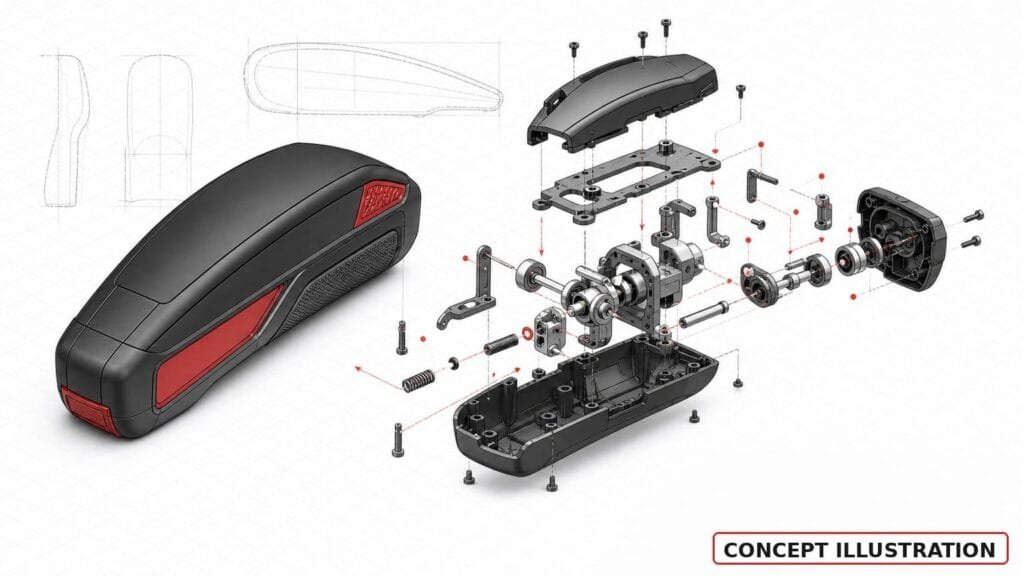
Choose an appearance prototype when the decision concerns perceived quality, product proportions, colour breaks, texture, transparent or reflective areas, or presentation to internal stakeholders.
Define these inputs before quotation:
- approved CAD revision;
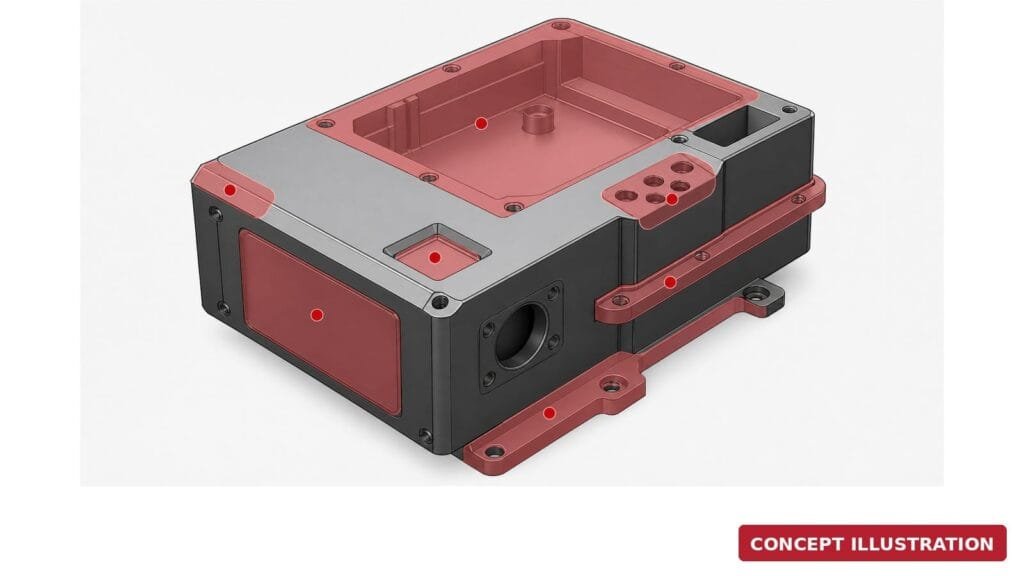
- cosmetic A/B/C surfaces;
- colour reference and acceptable comparison method;
- gloss or texture reference where relevant;
- transparent, translucent, reflective and opaque zones;
- viewing distance and lighting condition;
- whether seams, fasteners and interfaces must be represented;
- photography or presentation requirements.
Do not use a good-looking model as evidence of dimensional accuracy or function. A photograph can document visible form; it cannot prove hidden geometry, material identity, tolerance or performance. See how to plan prototype testing to close those gaps.
Fit and assembly prototype
Choose a fit prototype when the risk is concentrated at interfaces: locating features, connectors, clips, hinges, fasteners, seals, gaps, flushness or mating envelopes.
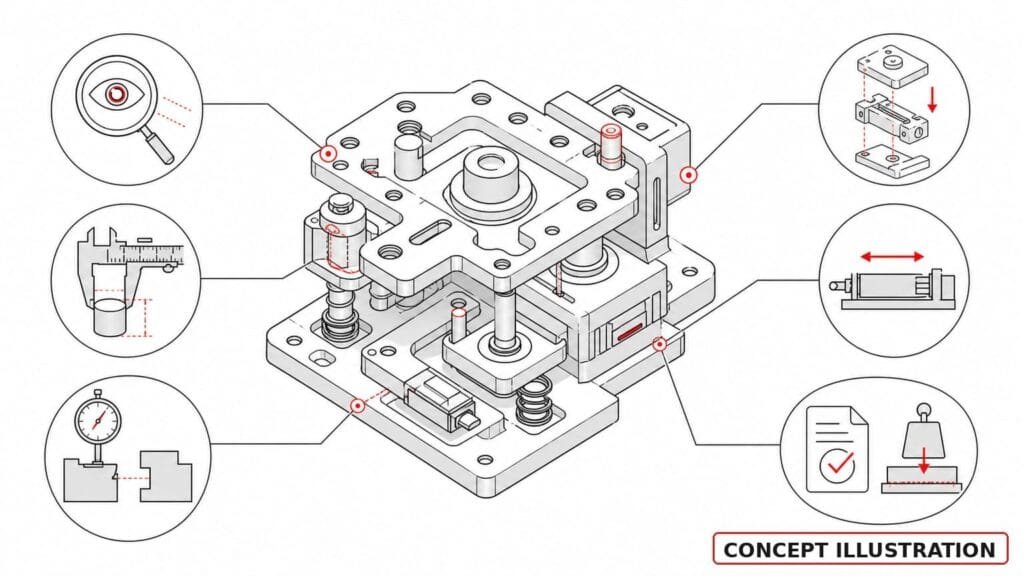
Choose an assembly prototype when the sequence itself matters. Ask whether a tool can reach a fastener, whether a cable can be routed without damage, whether parts can be oriented correctly and whether one component blocks installation of another.
The RFQ should identify:
- mating parts or interface CAD;
- critical datums and interface dimensions;
- gap/flush or clearance targets;
- fasteners and purchased components;
- intended assembly order;
- which fit observations require measurements and which require only a documented trial.
Functional prototype
A functional prototype should not be described as simply “working.” Define the selected function and the operating envelope, then link each function to the evidence that will prove it.
For each function, provide:
- requirement ID or plain-language requirement;
- input and expected output;
- load, speed, temperature, voltage, pressure or other relevant conditions;
- duration or number of cycles, if applicable;
- acceptance rule;
- test article configuration;
- evidence format.
If the prototype uses substitute materials, simplified electronics or temporary fixtures, record those differences. The result applies to that configuration, not automatically to the final product.
Prototype Scope Card
Copy this block into an RFQ:
CAD revision:
Decision to make:
Prototype type: Appearance / Fit / Assembly / Functional / Test article
Critical surfaces:
Critical interfaces:
Selected functions:
Operating or review conditions:
Acceptance evidence required:
Excluded functions or tests:
Quantity:
Target review date:
The “excluded” line matters. It prevents a visual model from being treated as a functional unit and prevents a selected functional test from being interpreted as full validation.
Example: headlamp assembly
A physical headlamp assembly may be requested for several very different reasons:
- styling review of the outer cover and housing;
- gap and interface review against adjacent body geometry;
- assembly review of housing, cover, brackets and rear interfaces;
- lighting demonstration;
- photometric, sealing, thermal or environmental testing.
These are not interchangeable scopes. ProtoManu’s Headlamp Assembly Prototype Project Record documents only visible physical evidence: a transparent outer cover, black housing, rear interfaces and a complete assembly. It does not claim optical, sealing, thermal, environmental or compliance testing. Use the record to inspect visible form and interfaces—not to infer unrecorded performance.
The Accuracy Behind Each Prototype Type
Choosing between a functional and an appearance prototype is a decision about evidence. Each type proves something specific and leaves the rest unproven. The table below pairs each type with the process that serves it and the accuracy that process actually holds.
| Prototype type | Proves | Process | Documented accuracy |
|---|---|---|---|
| Appearance | Form, colour, texture, perceived quality | SLA plus finishing, or machined and painted | ±0.05 mm, Ra verified on SJ-210 |
| Fit and assembly | That parts locate and close | CNC milling, 5-axis | ±0.005 mm |
| Functional | That the design works under load | CNC milling or turning in production material | ±0.005 / ±0.01 mm |
| Test article | That a specific test can be passed | Route chosen per test, verified on CMM | ±0.001 mm where required |
| Small batch | That the process is repeatable | Route per geometry, with fixtures | Per process, with sampling plan |
The mistake this table prevents is asking one part to prove everything. An appearance prototype in a convenient resin proves nothing about load capacity, and a functional prototype in production material proves nothing about colour match. Spending on one part that answers both questions usually means answering neither convincingly.
Verification Available for Either Type
Whichever route is chosen, the evidence can be documented rather than asserted:
- Zeiss Contura G2 CMM — ±0.001 mm, envelope 700 × 700 × 600 mm, for dimensional reports and first-article inspection.
- Mitutoyo Surftest SJ-210 — surface roughness Ra 0.005 to 40 μm, which is how an appearance claim becomes a number.
- TESA Micro-Hite 600 — height and step measurement, 0 to 600 mm.
ISO 9001:2015 with a product qualification ratio above 99%. Of 50+ staff, 2 are dedicated inspectors alongside 6 engineers and 4 designers.
Before requesting a quote
- [ ] We have written the decision this prototype must support.
- [ ] We have selected appearance, fit, assembly, function or testing scope.
- [ ] We have marked critical surfaces and interfaces.
- [ ] We have defined evidence and acceptance rules.
- [ ] We have listed exclusions.
- [ ] We have supplied the relevant mating parts and purchased components.
- [ ] We have identified CAD revision, quantity and timing.
Get Quote
Send your CAD, Prototype Scope Card and required evidence. ProtoManu can review the request against the decision you need to make before quotation. Use the DFM checklist to confirm the drawing inputs are complete.
CTA: Get Quote
FAQ
Is an appearance prototype the same as a visual prototype?
They are commonly used for the same purpose: evaluating visible form and finish without assuming full function. Define the required surfaces and viewing conditions rather than relying on the label alone.
Can one prototype be both appearance and functional?
Yes, but each purpose needs separate requirements and acceptance evidence. Combining them may change materials, components, construction and cost.
Do I need production material for a functional prototype?
Not always. It depends on what the function is and whether material behaviour affects the decision. Any substitute must be documented as a limitation.
What files should I send?
Send the current 3D CAD, a marked 2D drawing or PMI where available, mating-part data, purchased-component specifications and the completed scope card.
Sources
- NASA, Systems Engineering Handbook — requirements, verification and evidence methods: https://www.nasa.gov/wp-content/uploads/2018/09/nasa_systems_engineering_handbook_0.pdf
- DFMA, Design for Manufacturing — manufacturing decisions should be considered during design: https://www.dfma.com/design-for-manufacturing.asp
Related Project Evidence
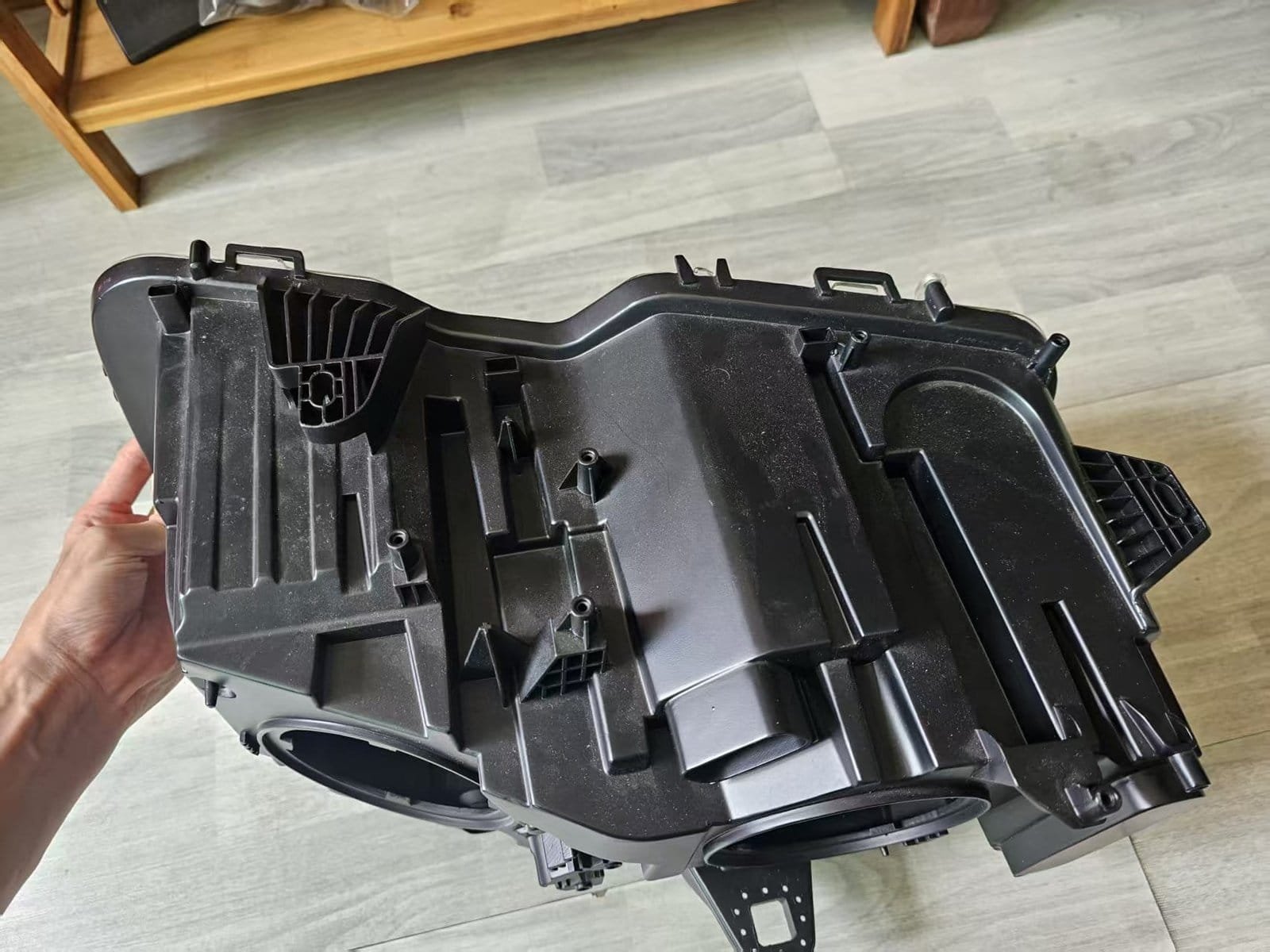 Headlamp Assembly Prototype
Frequently asked questions
Should I build an appearance or a functional prototype first?
Whichever decision is blocking the project. If stakeholders cannot agree on form, an appearance prototype unblocks that; if the open question is whether the mechanism works, only a functional part answers it. Building one part to settle both usually means neither question is answered convincingly.
Can one prototype be both functional and appearance?
It can, but the cost is usually higher than two separate parts, because an appearance-grade surface and a production material have to coexist. The result is a part that proves function and appearance at once, which is only worth it when both questions are genuinely open and the budget allows.
Does an appearance prototype need production material?
Not for form and colour, which can be shown in a substitute material with the right finish. It does matter when the appearance depends on the material itself — moulded-in texture, translucency, or a specific surface finish that only the production resin produces.
How accurate should a fit and assembly prototype be?
Accurate enough that the fit result transfers to production. In practice that means holding the tolerances the drawing specifies on the interface features, typically ±0.005 mm on machined mating surfaces. A prototype that fits only because it was hand-adjusted proves nothing about the batch.
What is the cheapest prototype that still answers a real question?
Usually a machining route in a representative material with the critical features toleranced and everything else left reference. Paying for cosmetic finish on a part that will be cut apart, or tightening tolerances on features nobody will measure, is the most common way to overspend.